Why We Started
We wanted a simple outcome: run Codex on our own Macs and control it from iPhone without losing interactivity. Existing mobile coding experiences tend to fail in two ways: setup friction and stream overload. CodexAnywhere was designed to solve both.
Build Snapshot
- 30 commits over the release sprint
- iOS app, macOS menu bar app, and local mac-agent
- Automated E2E + TestFlight + notarized macOS distribution
- Single-user, local-first architecture from day one
We Used Codex App From the Start
This project was not “generated once.” It was built in an iterative loop with Codex app as a daily pair-programming environment.
The loop we followed repeatedly:
- Define the next user-facing problem precisely.
- Use Codex app to inspect code paths and propose minimal diffs.
- Apply patches, run tests/E2E, and review regressions.
- Refine UI copy, spacing, and interaction until the flow felt obvious.
- Repeat until the entire path was production-safe.
That workflow helped us move quickly without losing quality gates.
Architecture Decisions That Mattered
We chose direct device-to-machine connectivity (over private networking) and avoided a central execution plane. The iOS app talks to your machine agent directly; a minimal relay is only used for push wakeups.
- Execution stays on user-owned machines.
- No hosted command execution backend.
- macOS menu bar app handles local setup and pairing UX.
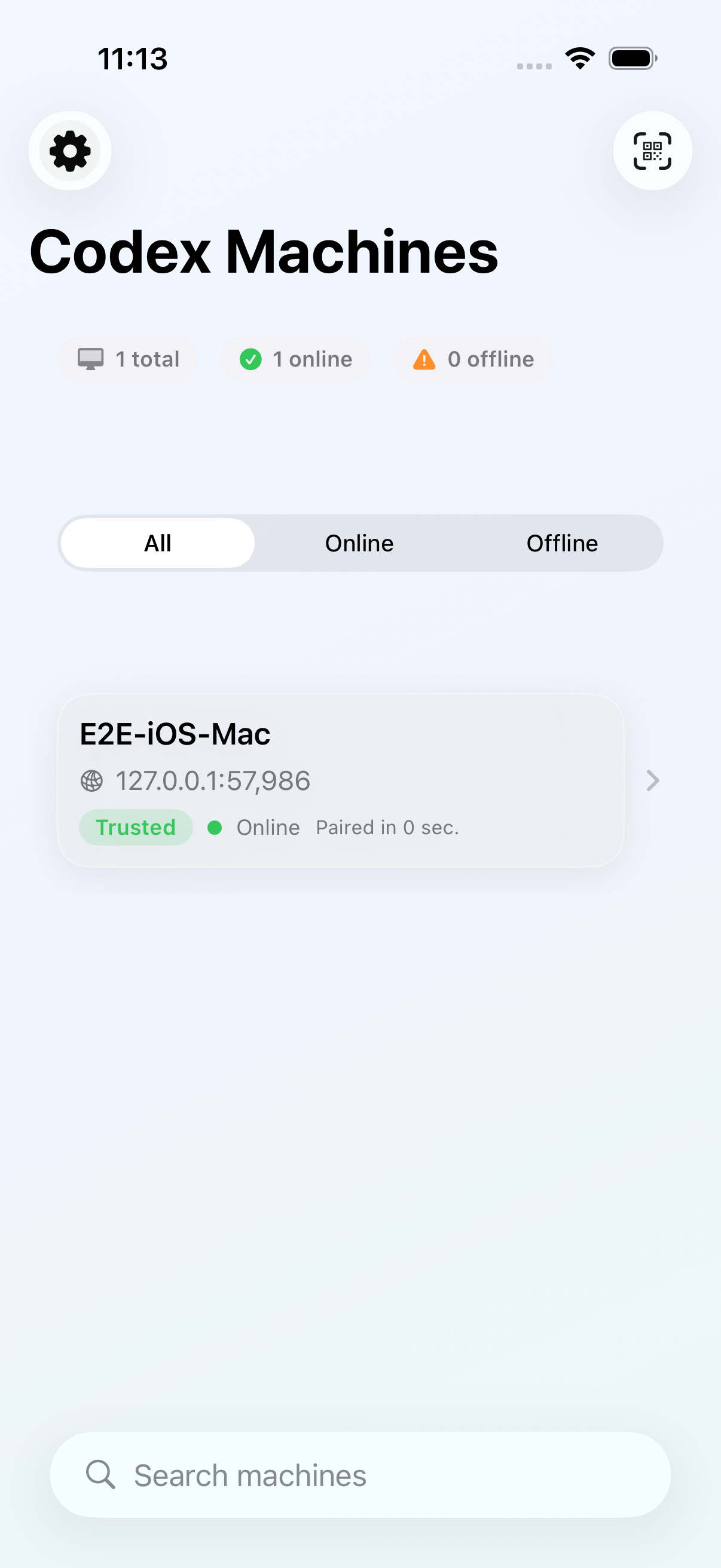
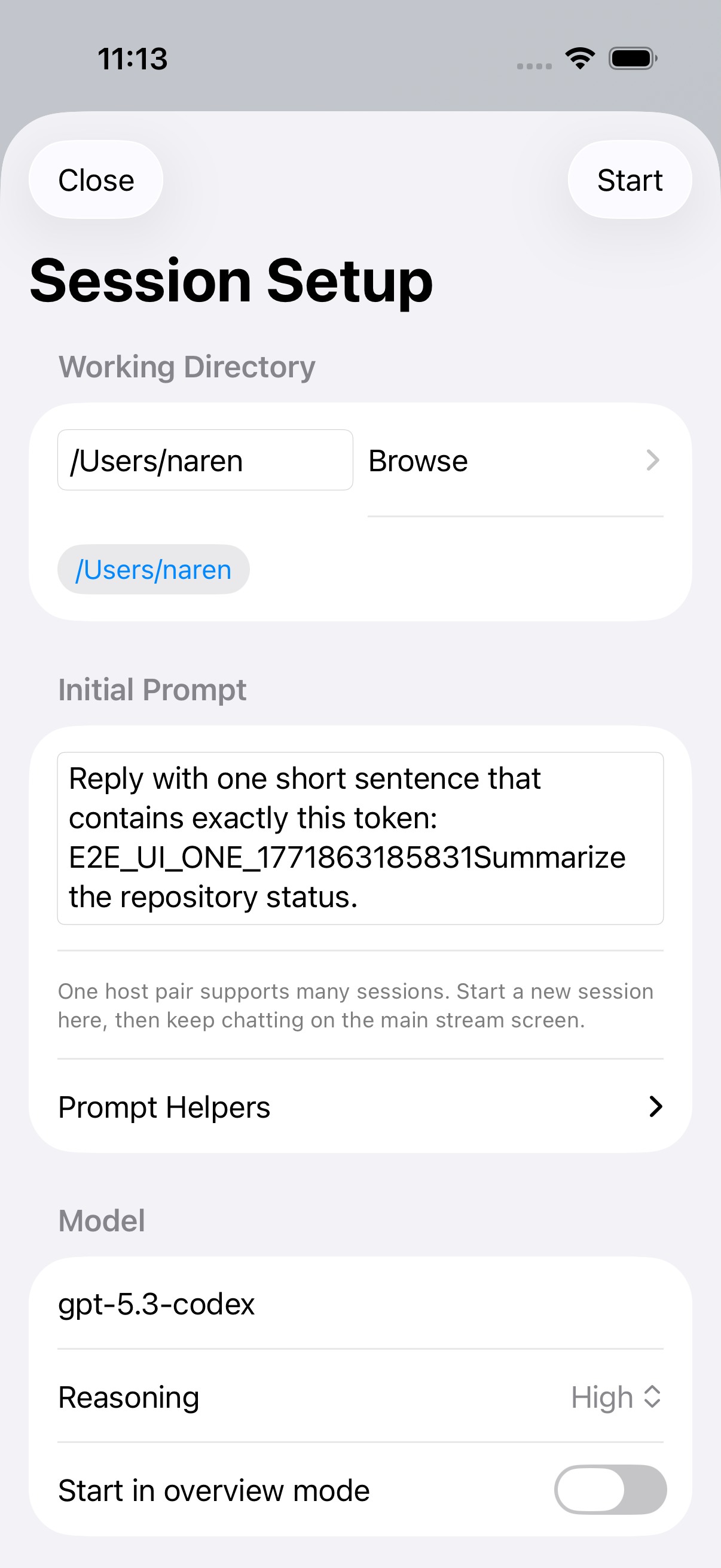
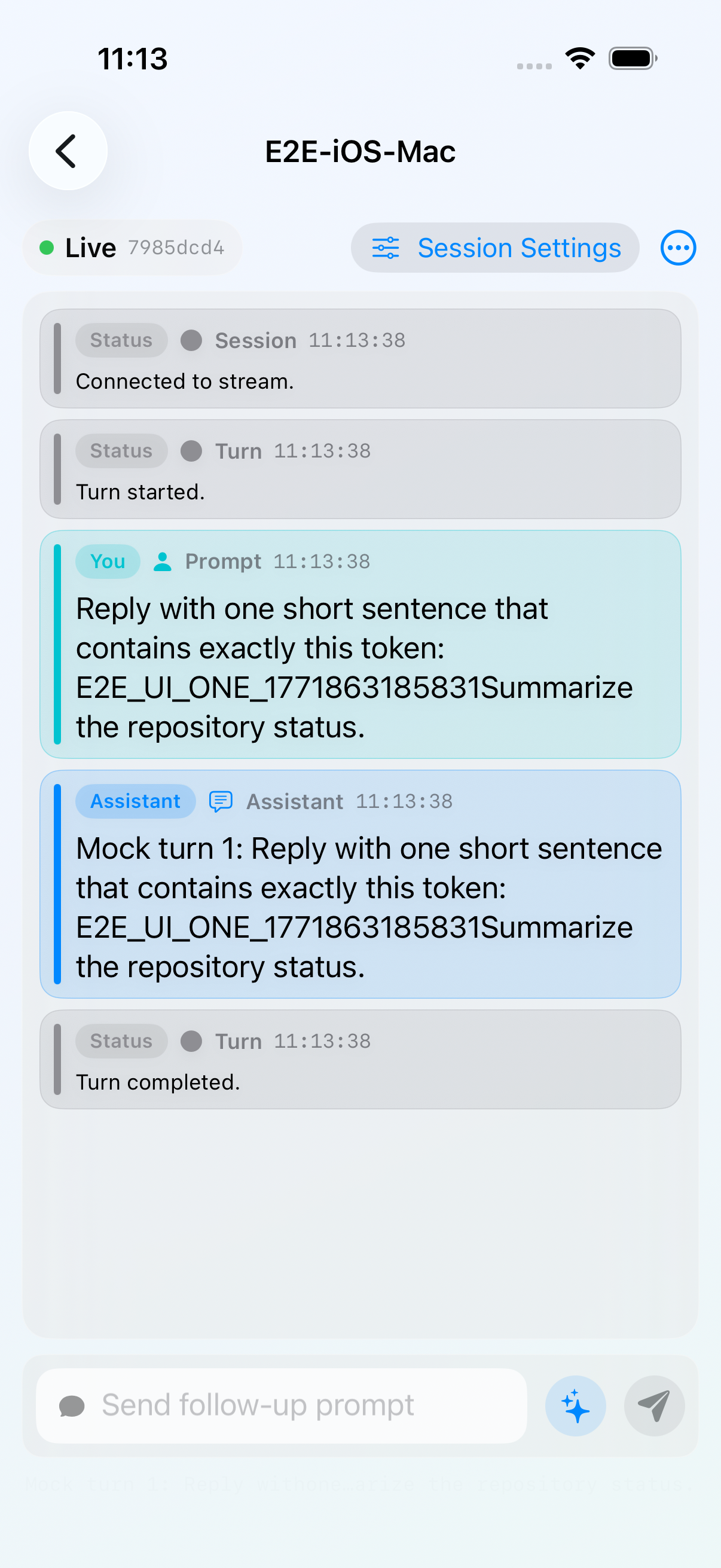
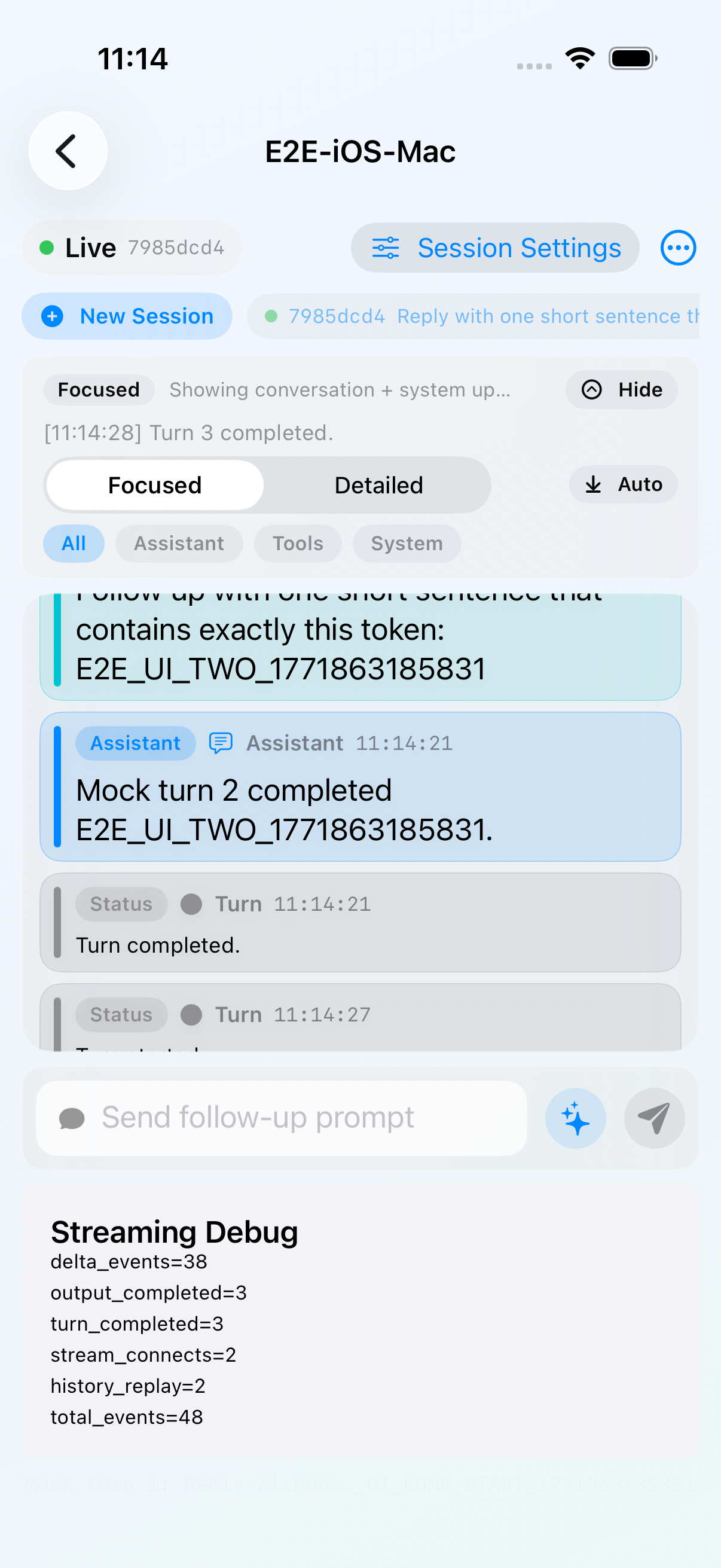
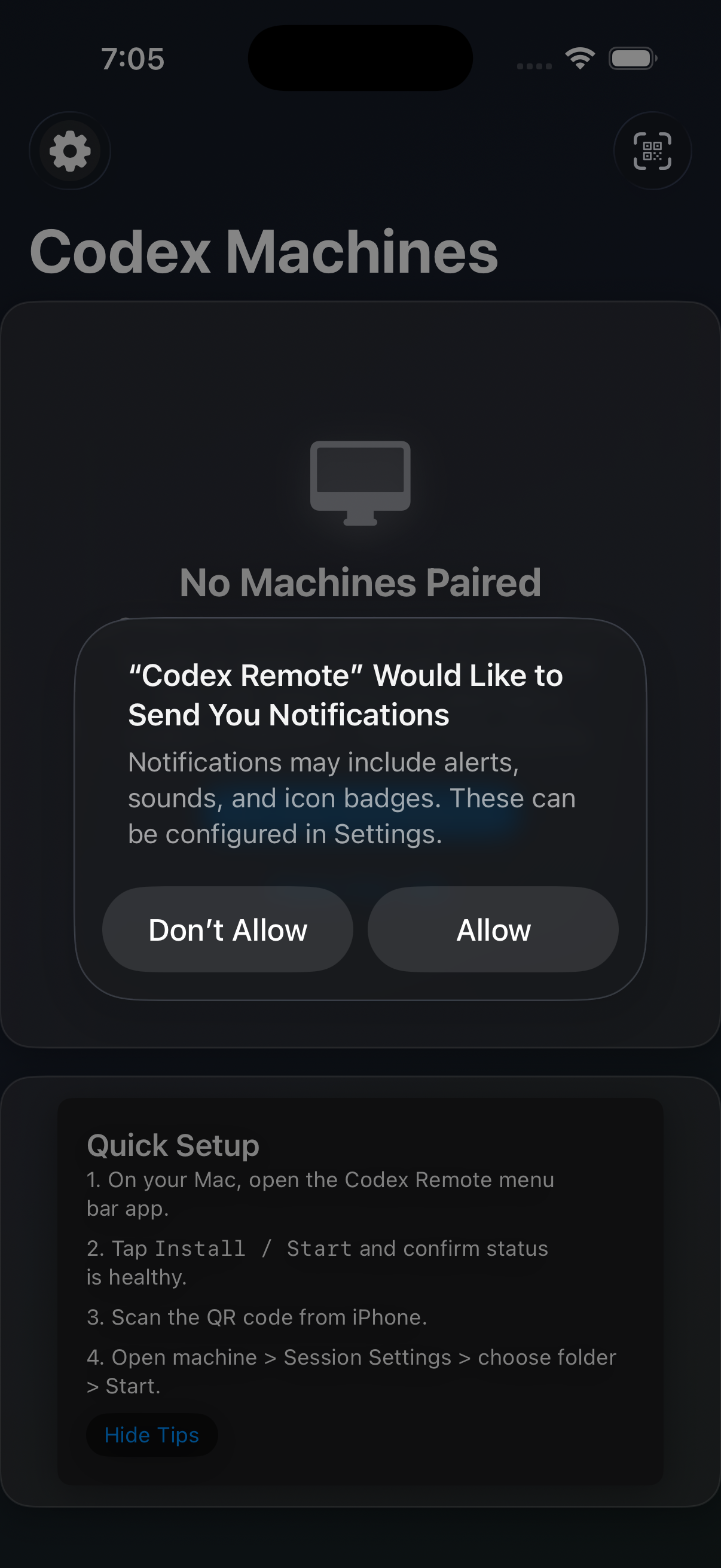
Product Screens During Build
UX Changes That Unblocked Real Usage
Most of our effort went into reducing cognitive load, not adding controls. Key changes included:
- Host-centric model: pair once, run many sessions.
- Focused vs Detailed stream modes.
- Immediate user prompt echo in the timeline.
- QR scanner reliability fixes and explicit failure feedback.
- Auto-scroll and “jump to latest” improvements for long runs.
Reliability and Release Engineering
We treated release tooling as core product work, not post-processing. The project now includes:
- Deterministic iOS E2E flows with screenshot capture.
- Fastlane lanes for TestFlight and App Store listing prep.
- Automated metadata/screenshot upload to App Store Connect.
- Signed and notarized macOS app + DMG packaging.
This kept shipping velocity high while reducing last-mile release risk.
What We Learned
Mobile coding can work, but only when interaction design is intentional. The biggest wins came from stream clarity, setup simplification, and reliable reconnection behavior. Codex app was essential because it let us iterate quickly while keeping implementation and verification tightly coupled.